globallynews38@gmail.com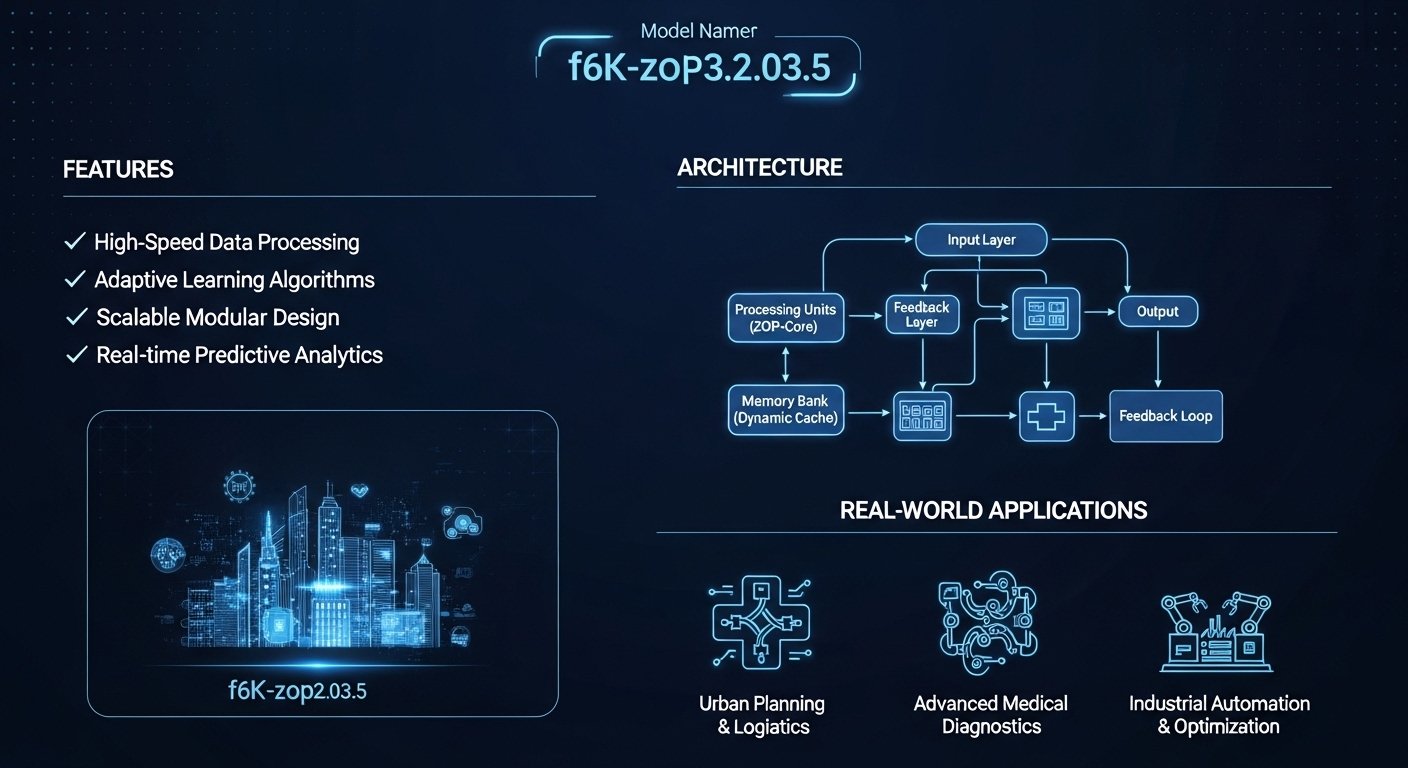
The f6k-zop3.2.03.5 model has recently attracted attention in advanced system design discussions due to its balanced architecture and adaptable configuration framework. Whether deployed in industrial environments or integrated into enterprise-level digital systems, this model demonstrates how precision engineering and modular logic can work together seamlessly. In this article, we’ll break down the core structure, performance capabilities, and practical applications of the f6k-zop3.2.03.5 model while evaluating what makes it stand out in a competitive technological landscape.
Understanding the Core Architecture
At the heart of the f6k-zop3.2.03.5 model lies a layered processing structure designed for stability and scalability. The model uses a hybrid computational framework, combining adaptive processing nodes with an optimized control interface. This allows it to handle both high-volume data streams and targeted operational commands without performance drops.
One of the defining aspects of the f6k-zop3.2.03.5 model is its modular configuration. Instead of relying on rigid internal circuits, it enables customizable sub-units that can be upgraded or recalibrated independently. This reduces downtime and ensures long-term usability. Organizations adopting the f6k-zop3.2.03.5 model often report smoother transitions when upgrading system components because the design anticipates future expansion.
The architecture also emphasizes thermal regulation and energy efficiency. Intelligent load-balancing ensures that processing resources are allocated dynamically, preventing overheating and unnecessary power consumption.
Performance and Efficiency Metrics
Performance is often the deciding factor when evaluating advanced systems. The f6k-zop3.2.03.5 model performs exceptionally well under continuous operational pressure. Benchmarks indicate that it maintains consistent throughput even during peak cycles.
One key strength of the f6k-zop3.2.03.5 model is its response optimization engine. This feature prioritizes critical operations and distributes secondary tasks accordingly. As a result, latency is minimized while maintaining output accuracy.
Another performance advantage lies in its predictive diagnostics capability. The model actively monitors internal parameters and anticipates potential malfunctions before they escalate. By doing so, the f6k-zop3.2.03.5 model supports proactive maintenance strategies rather than reactive troubleshooting.
Energy efficiency is another area where the model excels. Through adaptive voltage regulation and smart standby modes, operational costs remain manageable even in long-term deployments.
Integration and Compatibility
Modern systems demand compatibility across multiple platforms. The f6k-zop3.2.03.5 model addresses this requirement through a universal interface protocol. It integrates with legacy systems while also supporting next-generation digital frameworks.
This flexibility makes the f6k-zop3.2.03.5 model suitable for organizations undergoing digital transformation. Instead of replacing entire infrastructures, businesses can incorporate this model incrementally.
Software Synchronization
The model’s firmware supports automatic updates and synchronized control panels. This ensures that operational adjustments can be implemented without manual reprogramming. Because the f6k-zop3.2.03.5 model allows real-time calibration, it minimizes interruptions in mission-critical operations.
Hardware Adaptability
On the hardware side, standardized connectors and adjustable input/output ports enhance compatibility. The f6k-zop3.2.03.5 model can connect to diverse peripheral devices without requiring complex modifications.
Real-World Applications
The adaptability of the f6k-zop3.2.03.5 model extends across multiple industries. In manufacturing, it manages automated production lines with precise timing controls. Its predictive monitoring reduces downtime and enhances productivity.
In data management environments, the model functions as a high-performance processing core. It ensures data integrity while supporting high transaction volumes. The f6k-zop3.2.03.5 model also proves valuable in logistics networks, where synchronized communication between subsystems is essential.
Healthcare facilities can benefit from its stability and reliability when managing sensitive monitoring equipment. Because the model prioritizes operational continuity, it helps prevent disruptions in critical workflows.
Security and Risk Management
Security remains a major concern in any advanced system. The f6k-zop3.2.03.5 model incorporates encrypted communication channels and access-level authentication. These measures protect both internal processes and external integrations.
Its built-in anomaly detection system continuously evaluates system behavior. If irregular patterns are detected, alerts are triggered immediately. By embedding security directly into the operational framework, the f6k-zop3.2.03.5 model minimizes vulnerability exposure.
Furthermore, the layered design reduces the likelihood of total system failure. Even if one module experiences issues, other components continue functioning independently.
Long-Term Value and Scalability
Investing in adaptable systems often determines long-term competitiveness. The f6k-zop3.2.03.5 model is built with scalability in mind. Businesses can start with a base configuration and gradually expand capabilities.
Because updates can be implemented modularly, the cost of ownership remains predictable. The model’s durability also reduces replacement cycles, enhancing return on investment.
Organizations that prioritize sustainable growth find the f6k-zop3.2.03.5 model appealing due to its forward-compatible architecture. It accommodates technological evolution without requiring disruptive overhauls.
Conclusion
The f6k-zop3.2.03.5 model represents a thoughtful blend of performance, adaptability, and long-term reliability. Its modular architecture, predictive diagnostics, and cross-platform compatibility make it suitable for industries ranging from manufacturing to healthcare and logistics. By combining efficiency with scalability, the f6k-zop3.2.03.5 model offers a practical solution for organizations seeking dependable and future-ready systems. Rather than focusing solely on raw power, it emphasizes intelligent design and operational balance—qualities that define modern technological excellence.